
AI Tool Guides
AI Tools for Recruiters, Ranked
Some links in our roundups are affiliate links: if you buy through them we may earn a commission, at no extra cost to you. It never changes which tools we recommend or where they rank — we only list tools we would genuinely tell a friend to use.
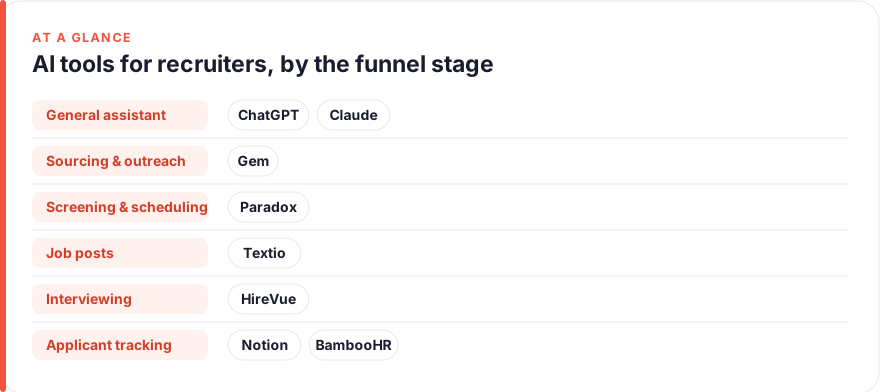
The short answer: For most recruiters in 2026, start with a general assistant (ChatGPT or Claude) for outreach, boolean strings and screening notes, then add Gem as the core of your sourcing and pipeline. Layer in Paradox for high-volume screening and scheduling, Textio for bias-checked job posts, and HireVue for structured interviewing at scale. Notion and BambooHR cover lightweight applicant tracking and the hand-off into onboarding. Ranked by impact on a recruiter’s week: ChatGPT, Gem, Claude, Paradox, Textio, HireVue, Notion, BambooHR.
Recruiting is a funnel made of language and logistics: writing a job post, finding people, sending the outreach, screening the replies, booking the interviews, and keeping every candidate warm in between. Almost every step is repetitive writing or scheduling, which is exactly the shape of work current AI is good at. The catch is that a hiring decision affects someone’s livelihood, so where you let AI screen or score people matters far more than where it just drafts an email.
This guide ranks eight tools by how much time they realistically give back across a recruiter’s week, grouped by the job they do in the funnel: sourcing and outreach, job-post writing, screening and scheduling, structured interviewing, and applicant tracking. It is deliberately opinionated. If you adopt only the top two or three, you have covered most of the leverage. For the broader People-operations picture — helpdesk, performance, engagement — see our adjacent, deliberately different guide to AI tools for HR; this one stays inside the hiring funnel.
- A general assistant (ChatGPT or Claude) is the highest-impact single purchase for a recruiter: it drafts outreach, boolean strings, JD bullets and screening notes across every stage.
- Gem is the tool most worth paying for once sourcing and pipeline are your daily job — it is the funnel, not an add-on.
- High-volume, frontline and graduate hiring is where Paradox and HireVue earn their keep; a recruiter making a handful of hires a quarter rarely needs either.
- Anything that screens, ranks or scores candidates needs a human accountable, an audit trail, and a bias check. AI drafts; a person decides.
- Every price below is a rough July 2026 snapshot and changes often — always confirm on the vendor’s live page before you budget.
How we picked these
We ranked on one question: how much time and mental load does this tool remove from a typical recruiter’s week, accounting for what it costs and how likely you are to actually use it. A tool that shaves twenty minutes off every sourcing session ranks above one that saves two hours but only during a quarterly graduate intake.
Three things counted heavily. First, breadth: does it help at one stage of the funnel or several. Second, fit: does it slot into where your work already happens — your ATS, your inbox, your calendar — or demand a new habit. Third, honest value: whether the paid tier beats the free tier or a cheaper tool you already own. We down-ranked anything that hides how it scores candidates.
Prices are a July 2026 snapshot and change often, especially as recruiting AI gets bundled into ATS seats you already pay for. Treat every figure as “roughly, per user, before annual discounts and enterprise deals” and check the vendor before you buy. Several tools here are quote-based only. We have no affiliate relationships with any tool on this list; see our disclosure and more on how we test tools.
The shortlist
ChatGPT
Best for: Outreach, boolean strings and screening notesFree · Plus ~$20/mo · Business ~$20–25/user/mo
The single highest-leverage tool for a recruiter because it touches every stage of the funnel at least a little. Use it to rewrite a flat job post, generate ten boolean variations for a hard-to-fill role, personalise the first line of an outreach sequence, or condense a pile of CVs into comparable summaries. The free tier is genuinely useful; paid mainly buys speed, longer context and a Business plan that excludes your candidate data from training. If you buy one AI subscription, buy this or Claude.Pros
- Drafts personalised outreach, JD bullets, boolean search strings and rejection notes in seconds
- Turns a messy CV into a structured screening summary or interview question set
- Business plan keeps candidate data out of model training
Cons
- Will invent employers, dates or salary bands if you let it — verify everything against the source
- Not connected to your ATS or candidate data unless you wire it up
/assets/screenshots/chatgpt.png Gem
Best for: Sourcing, outreach automation and pipelineCustom / quote-based; published plans from ~$99/user/mo
The tool most worth paying for once sourcing and outreach are your daily job rather than an occasional sprint. Gem is a recruiting platform built around finding candidates, running multi-step outreach, and tracking a pipeline your leadership will ask about — with AI to surface profiles, re-engage past applicants and draft near-identical messages at scale. For a real talent function it is a serious contender because it is the funnel, not a bolt-on. For occasional hiring it is more than you need; ChatGPT plus a spreadsheet will cover the same ground. The same “automate the repetitive outreach” logic runs through our guide to automating lead generation on the sales side.Pros
- Strong candidate sourcing with AI-assisted profile discovery and re-engagement
- CRM-style pipeline, sequences and analytics built for recruiters
- Integrates with major ATS platforms so the funnel stays in one place
Cons
- Priced for teams that hire regularly; value drops sharply at low volume
- Custom quotes mean two similar teams can pay very different rates

/assets/screenshots/gem.png Claude
Best for: CV synthesis and careful candidate commsFree · Pro ~$17–20/mo · Team ~$20–25/seat/mo
A close peer to ChatGPT rather than a rival, and many recruiters keep both. Claude shines when the input is large and the output must stay faithful to it: comparing ten CVs against a scorecard, redlining a long role spec, or drafting a careful message to a candidate you don’t want to lose. Pick based on which voice you prefer and where your team already has seats. Either one covers the writing and synthesis that fills most of a recruiter’s week — and both need the same rule: give them the real detail as input, never ask them to recall it.Pros
- Excellent with long inputs: paste a stack of CVs or a long JD and ask for a shortlist rationale
- Tends toward measured, less hype-y prose that suits candidate and hiring-manager comms
- Holds a nuanced brief without flattening the detail
Cons
- Same verification burden as any assistant — never trust an unchecked claim about a candidate
- Narrower plugin and integration ecosystem than ChatGPT
/assets/screenshots/claude.png Paradox
Best for: High-volume screening and interview schedulingCustom / quote-based (enterprise)
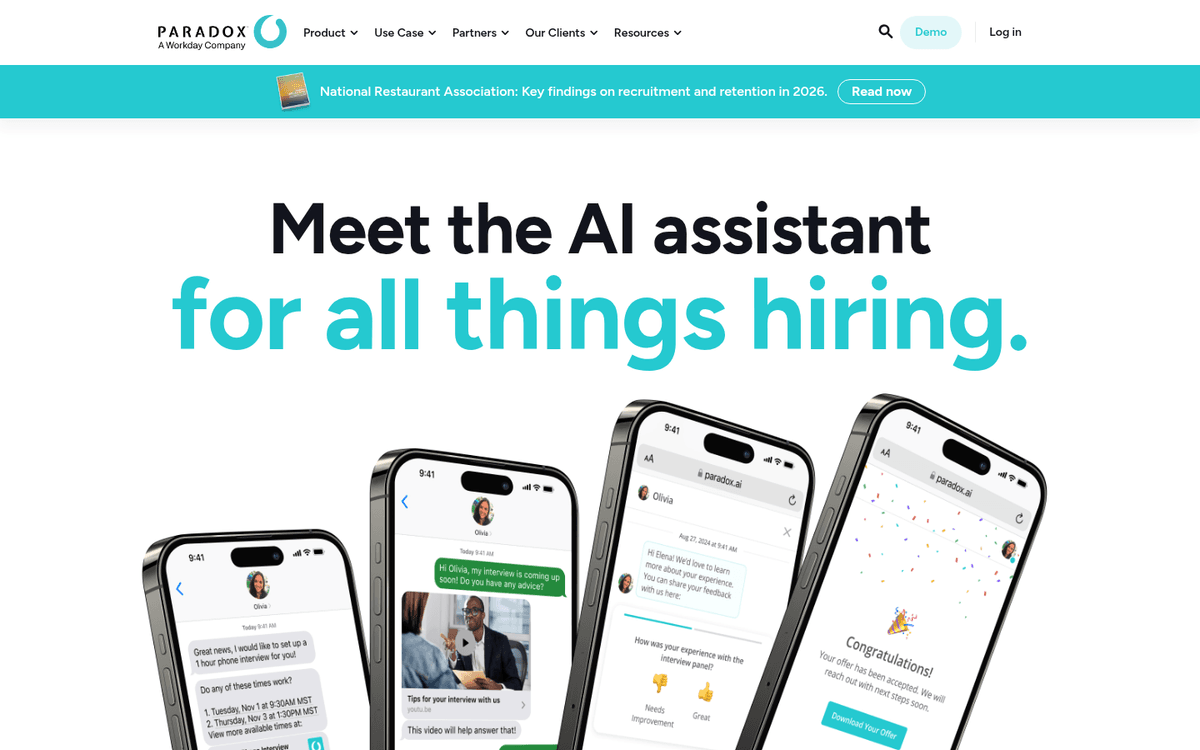
Paradox’s assistant, Olivia, handles the grind of high-volume recruiting: answering applicant questions, running first-pass screening, and booking interviews straight into calendars. For retail, hospitality, logistics and other roles where you process thousands of applicants, it removes the single biggest time sink in the funnel. The care point is real: any automated knock-out question decides who moves forward, so the criteria must be job-related, unbiased and reviewed over time. Not for a team making a handful of hires a year — this is a scale tool for a scale problem.Pros
- Conversational assistant (Olivia) screens and books interviews without a recruiter touching a calendar
- Excellent for high-volume, frontline and hourly hiring
- Cuts time-to-schedule dramatically and answers candidate questions around the clock
Cons
- Built for scale — a low-volume desk will never fill it
- Automated screening logic decides who advances, so questions and knock-outs need careful, fair design
/assets/screenshots/paradox.png Textio
Best for: Bias-checked job posts and outreachCustom / quote-based (enterprise)
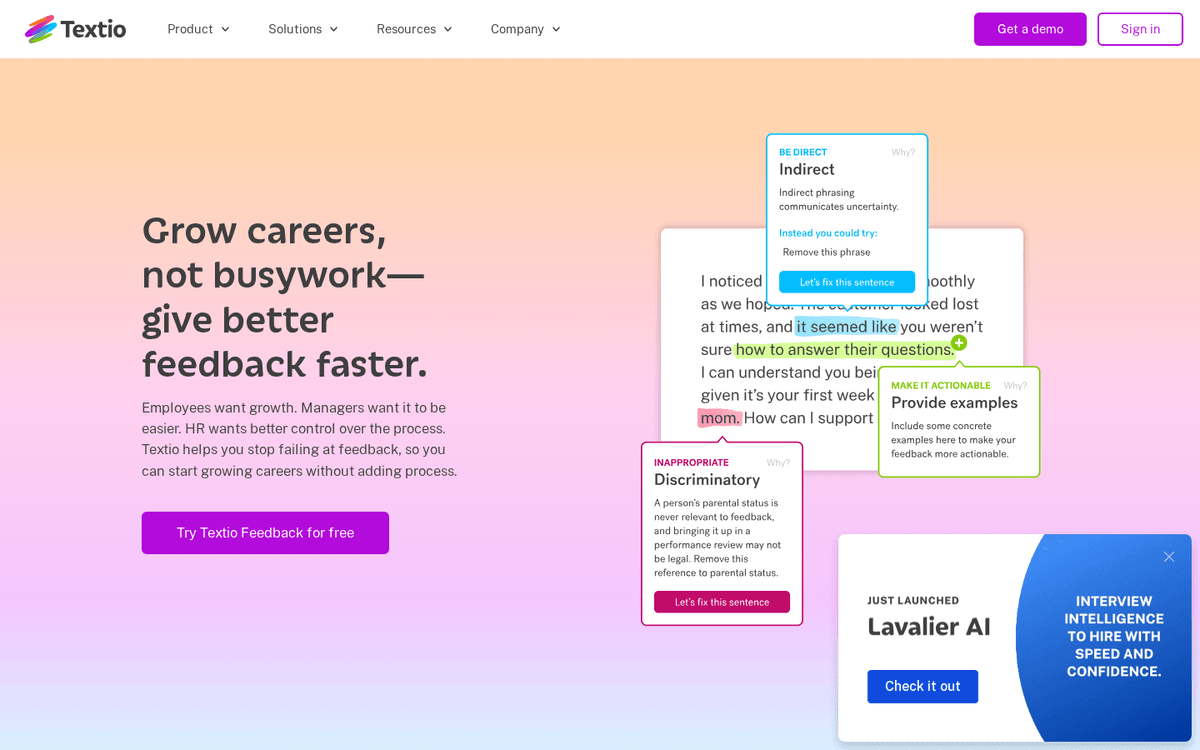
Textio reads your job descriptions and outreach and highlights language that quietly narrows the pool — age-coded terms, overly masculine phrasing, vague hype — while you type. For teams hiring at any real scale it is one of the few AI tools that actively pushes the top of the funnel toward fairer, clearer writing rather than away from it. Pricing is quote-based and aimed at organisations, so a solo recruiter can get most of the benefit from a well-crafted ChatGPT prompt instead. It earns its place once consistent, inclusive writing across many hiring managers becomes a genuine problem worth solving in software.Pros
- Flags biased or exclusionary language in job posts as you write
- Aims to widen and improve your candidate pool with clearer, more inclusive phrasing
- Extends beyond JDs to recruiter outreach and written feedback
Cons
- Enterprise, quote-based pricing — overkill for a solo desk or tiny team
- Guidance is a nudge toward better language, not a legal sign-off
/assets/screenshots/textio.png HireVue
Best for: Structured, high-volume interviewingCustom / quote-based (enterprise)
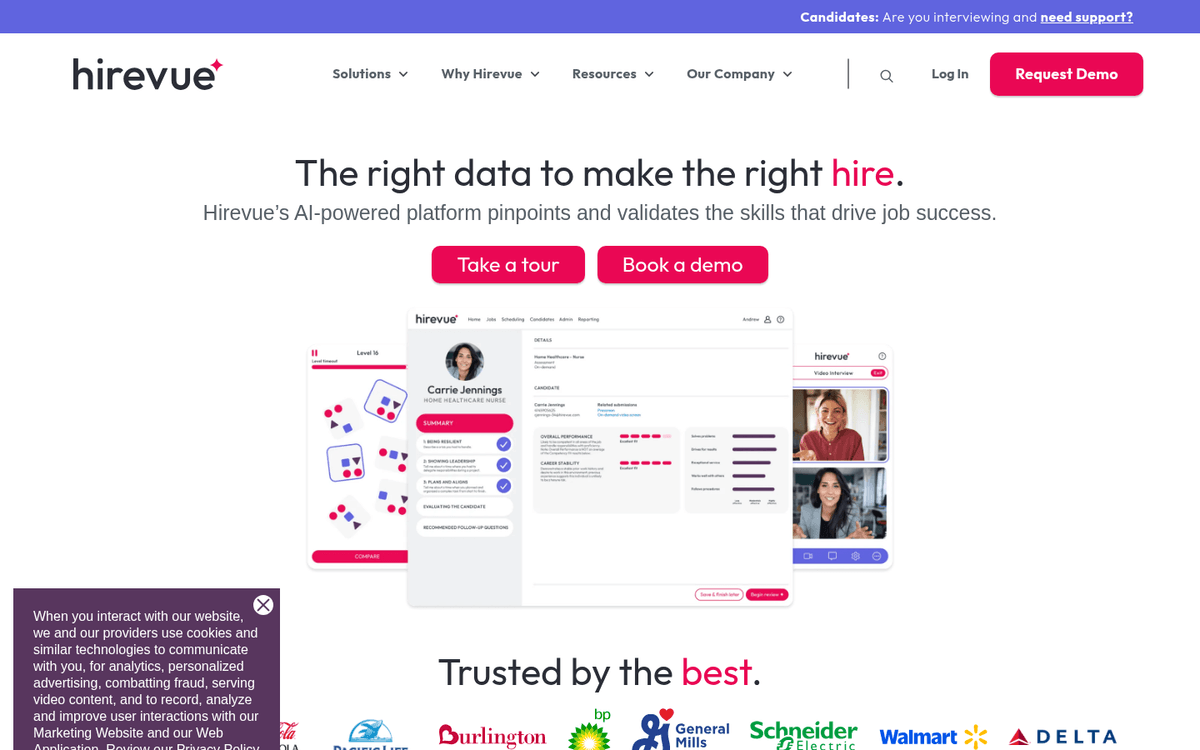
HireVue runs structured video interviews and assessments for organisations hiring in volume, standardising the format so every candidate faces the same questions. Used well — as structure and consistency, with humans making the calls — it can make high-volume interviewing fairer and faster. Used carelessly, automated scoring of candidates is exactly the kind of AI that invites legal and reputational risk, so it earns its place only for teams that will invest in oversight and auditing. A specialist tool for a specific, large-scale problem, not a general recommendation for the average desk.Pros
- Structured video and assessment interviewing at scale
- Consistent, repeatable evaluation format for every candidate
- Useful for large graduate and frontline intakes
Cons
- Automated assessment and scoring demand rigorous bias auditing
- Candidate experience can feel impersonal if it replaces rather than structures human judgement
/assets/screenshots/hirevue.png Notion
Best for: Lightweight applicant tracking for small teamsFree · Plus ~$10/user/mo · Business ~$20/user/mo; AI bundled into plans
For a solo recruiter, a founder hiring their first few people, or a small team without an ATS budget, Notion is a credible lightweight tracker: a database of candidates, a pipeline board, and interview notes in one place, with AI to summarise and search across it. It is nearly free leverage if you already use Notion for everything else. Don’t adopt it as a recruiting system when volume is real — it lacks the compliance, parsing and automation a proper ATS gives you — but as a scrappy first pipeline it beats a spreadsheet and a cluttered inbox.Pros
- Build a simple candidate tracker, pipeline board and interview-notes hub without a dedicated ATS
- AI summarises long notes and answers questions across your workspace
- Low adoption cost if your team already lives in Notion
Cons
- Not a real ATS — no compliance features, parsing or automated workflows out of the box
- Value collapses once hiring volume outgrows a hand-built database
/assets/screenshots/notion.png BambooHR
Best for: ATS plus the hand-off into onboardingCustom / quote-based, per employee/mo
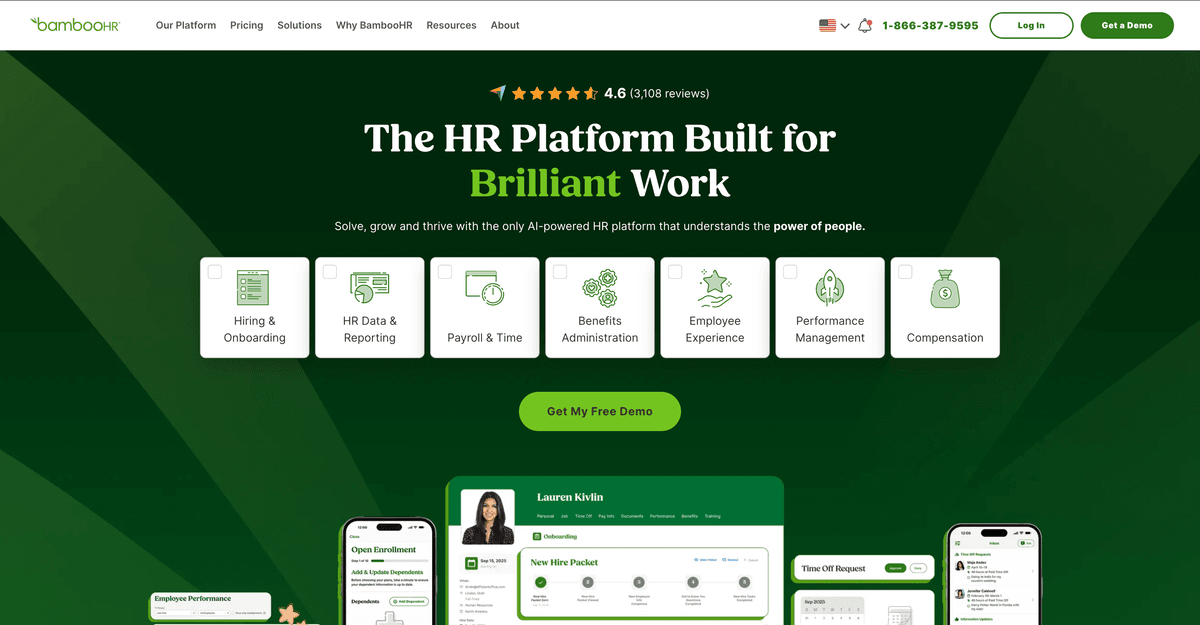
BambooHR is a well-liked core HR system for small and mid-size companies, with an applicant-tracking module that hands new hires cleanly into onboarding, records and reporting. The AI is layered on top for admin and summarising, not the reason to buy. For recruiters it earns a place because hiring doesn’t end at “offer accepted” — the hand-off into a proper system beats re-keying a new starter into spreadsheets. If you’re still running hiring and onboarding out of email, an ATS-plus-HRIS like this is a bigger upgrade than any point AI tool. Pricing is quote-based and usually per employee.Pros
- Applicant tracking that flows straight into records, onboarding and time-off
- AI features layered onto admin, reporting and data summaries
- Approachable, non-technical interface for small and mid-size teams
Cons
- You buy it as a system of record, not for the AI — that's an accelerant
- Per-employee pricing adds up as you grow
/assets/screenshots/bamboohr.png Which should a recruiter buy first?
Work in layers rather than buying the whole funnel at once.
Layer one, this week. Pick one general assistant, ChatGPT or Claude, and use it for everything: outreach drafts, boolean strings, JD bullets, CV summaries and screening notes. On a paid Business or Team plan your candidate data stays out of training. This layer costs at most one subscription and covers the majority of the leverage for most desks.
Layer two, when the funnel gets heavy. If sourcing and pipeline are your daily job, add Gem — this is the point where dedicated recruiting AI starts paying back the subscription. If your writing needs to be consistent and inclusive across many hiring managers, add Textio.
Layer three, at real volume. For frontline, hourly or graduate intakes where you process thousands of applicants, Paradox for screening and scheduling and HireVue for structured interviewing are where the biggest time savings live — provided you commit to designing and auditing the automated steps.
Underneath it all, a system of record. Track candidates in Notion while volume is small, and move to an ATS-plus-HRIS like BambooHR once hiring is regular and the onboarding hand-off matters. The mistake to avoid is buying by category instead of by pain: a tool that solves a problem you don’t have is just another tab and another invoice.
FAQ
What is the single best AI tool for a recruiter?
For most recruiters it’s a general reasoning assistant, ChatGPT or Claude, because it helps at nearly every stage of the funnel: writing outreach and job posts, generating boolean strings, summarising CVs and drafting screening notes. Specialist tools beat it only within their lane — sourcing, high-volume screening, structured interviewing — and only when that lane is a big, repeated part of your week.
Do I need to pay, or is the free tier enough?
Often the free tier is plenty to start. Free ChatGPT and Claude handle most everyday recruiting writing and synthesis, and Notion bundles useful AI into existing plans. Pay when you hit a real limit — usually speed, longer context, a Business plan that keeps candidate data out of training, or a specialist capability like sourcing automation or interview scheduling that free tools can’t match.
Are these prices accurate?
They’re a rough July 2026 snapshot. ChatGPT, Claude and Notion publish per-user prices that shift as AI features get rebundled; Gem, Paradox, Textio, HireVue and BambooHR are largely quote-based and scale with headcount or hiring volume, so they can run from modest to substantial annual contracts. Always confirm the current figure on the vendor’s site, and check whether the AI you need is already included in an ATS seat you own.
Can AI make hiring biased, and how do I stay compliant?
Yes, and this is the most important thing to get right. AI learns from historical data, so it can reproduce and even amplify existing bias in who gets shortlisted. Anything that screens, ranks or scores candidates should be treated as advisory, with a human accountable for each decision, an audit trail, and regular checks that outcomes aren’t skewing by protected characteristics. Some regions now require bias audits or candidate notice for automated hiring tools — confirm what applies where you hire, and never let AI make the final call unsupervised.
Do small recruiting teams actually need specialist software like Gem or Paradox?
Usually not. Gem, Paradox and HireVue are built for volume and priced for it. If you make a handful of hires a quarter, a general assistant for drafting outreach and screening notes plus a lightweight tracker in Notion will serve you well. Buy specialist recruiting AI when the volume of sourcing, scheduling or screening is genuinely overwhelming your desk — not before.
How is this different from a general “AI tools for HR” list?
This guide stays inside the hiring funnel — sourcing, outreach, job-post writing, screening, scheduling, interviewing and applicant tracking. A broader AI tools for HR roundup also covers People-operations jobs a recruiter usually doesn’t own: employee helpdesk, performance reviews, engagement surveys and core HRIS admin. If your role is talent acquisition specifically, start here; if you run the whole People function, read both.